Unveiling the M50 Engine: What Sets This Iconic Powerhouse Apart?
The iconic M50 engine, a benchmark of BMW's mechanical prowess, has carved a niche in automotive history since its introduction in the early 1990s. Its blend of strength, precision, and forward-thinking design has captivated both casual drivers and performance enthusiasts alike equally. However, what truly distinguishes the M50 from rival powerplants in its category? Delving into its notable specs and everyday performance uncovers an intricate story that goes beyond mere numbers.
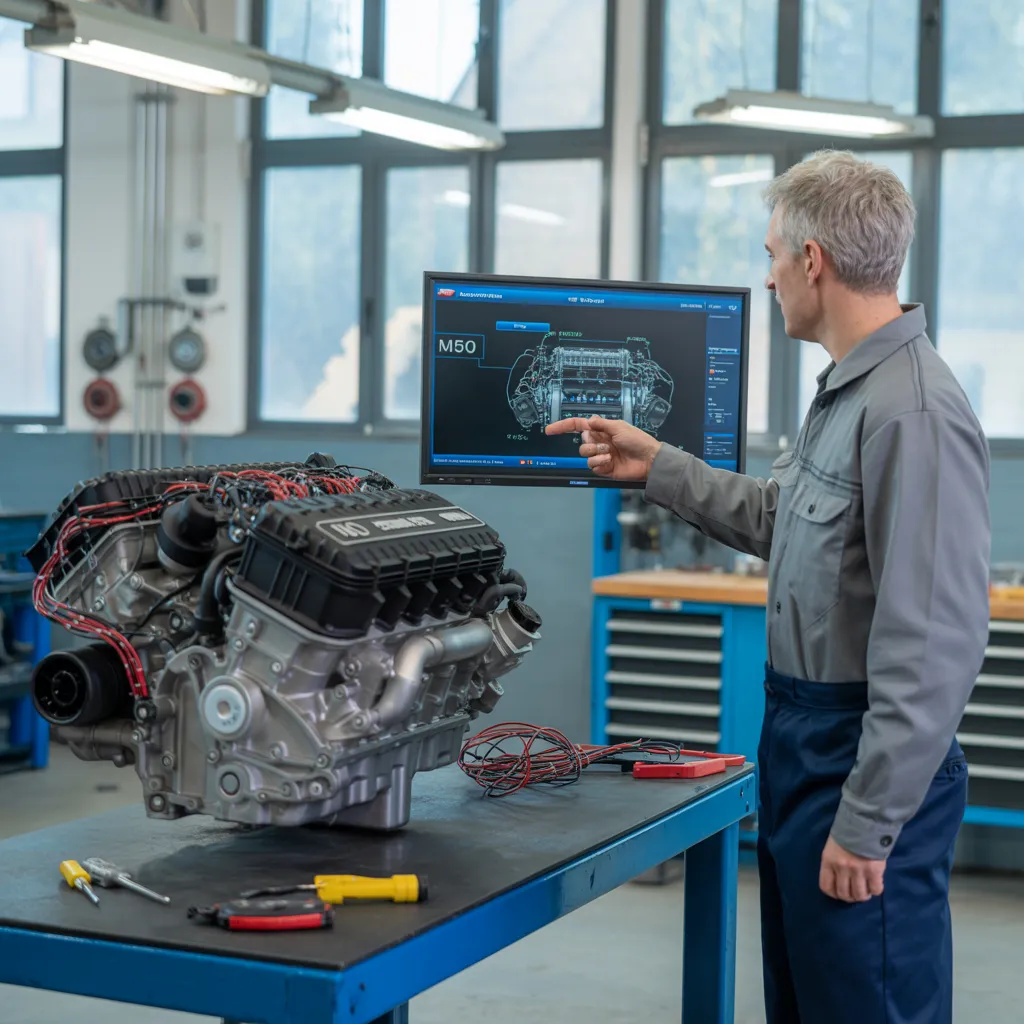
The Enduring Legacy of the M50 Engine in Automotive History
The M50 engine , a cornerstone of BMW's engineering history, has profoundly impacted vehicle performance and engineering since its introduction in the beginning of the 1990s. Celebrated for its inline-six configuration, the M50 paired refined operation with remarkable power output, establishing a new standard in its segment. This powerplant represented a transition to greater technological efficiency, featuring an aluminum block and a DOHC layout that enhanced both durability and performance.
The M50's advanced engineering attributes, like variable valve timing, contributed to its recognition for durability and driving precision. It was installed in a wide range of models, including the 3 Series and the Z3, leaving a lasting impact on BMW's lineup. BMW fans commended the M50 for both its impressive performance and its tunability, which fostered a dedicated network of performance enthusiasts. Because of this, the M50 engine continues to stand as a distinguished emblem of BMW's dedication to engineering excellence and performance-oriented design in automotive history.
Key Specifications: What Makes the M50 Unique?
Engine details showcase the M50's defining features that set it apart from its contemporaries. This inline-six engine features a displacement of 2.5L, delivering a combination of strength and efficiency. Significantly, the M50 incorporates a DOHC (dual overhead camshaft) design, enhancing airflow and improving performance at elevated engine speeds. With an output of approximately 189 horsepower and 170 pound-feet of torque, it offers robust acceleration and responsiveness.
The M50 further integrates a highly refined Bosch Motronic engine management system, fine-tuning fuel delivery and ignition timing for superior efficiency. Its aluminum construction supports a reduced overall weight, greatly benefiting handling and performance. Furthermore, the engine's relatively low center of gravity strengthens vehicle stability, making it a preferred selection among performance-minded drivers. These specifications reinforce the M50's reputation as a well-rounded powerplant, providing a combination of dependability and exhilarating performance that resonates with both casual drivers and performance aficionados alike.
Benchmarking the M50: How Does It Measure Up?
In evaluating the M50 engine's output, essential factors encompass power delivery, torque attributes, and general performance efficiency. Measuring these elements against alternative engines will underscore the M50's strengths and weaknesses. The purpose of this evaluation is to offer a comprehensive understanding of its competitive placement in the industry.
Power Output Comparison
Power output functions as a critical metric in evaluating the capabilities of the M50 engine compared to its rivals. The M50, renowned for its dependable engineering, consistently outputs between 140 to 200 horsepower, based on the particular variant and configuration. This power band positions it competitively within its class, regularly outperforming similar engines from rival manufacturers. To illustrate, when evaluated alongside the commonly available inline-four engines, the M50's power output provides a significant advantage, allowing for improved acceleration and enhanced performance. Additionally, the engine's construction supports a seamless power output, improving the overall driving feel. In summary, the M50 distinguishes itself not just for its numerical output but also for its skill in channeling that energy into agile, precise performance in real-world driving.
Torque Behavior Analysis
In analyzing the torque characteristics of the M50, it is clear that this engine showcases outstanding performance results when measured against its alternatives. The M50 is designed to deliver robust torque across a wide RPM range, resulting in improved drivability and responsiveness. This feature supports powerful acceleration, particularly in mid-range output, a vital aspect for both everyday driving and spirited performance. Stacked up against comparable engines in the same category, the M50 regularly outclasses them in terms of top torque figures, bolstering its reputation as a versatile powerhouse. Moreover, the engine's seamless power curve guarantees uniform power distribution, rendering it a popular selection with performance-oriented and everyday drivers, thereby strengthening its position in the competitive landscape.
Efficiency Indicators Review
The M50 engine stands out in torque characteristics and additionally exhibits commendable efficiency metrics that enhance its overall appeal. With an enhanced fuel consumption rate, the M50 stands out in its class, delivering an equilibrium between power and efficiency. When measured against rivals, the M50 offers superior thermal efficiency, translating to reduced emissions and lower operational costs. Its sophisticated fuel injection system enables accurate combustion, enhancing power generation while limiting energy waste. Furthermore, the engine's lightweight design aids in enhancing fuel efficiency, making it a strategic choice for both performance enthusiasts and eco-conscious drivers. Ultimately, the M50 engine's efficiency standards reinforce its status as a top-tier powerhouse in the automotive industry, showcasing innovation and practicality.
What Innovations Boost the M50's Performance?
Revolutionary engineering shapes the M50's performance enhancements, establishing a new standard in the automotive industry. Innovative features such as sophisticated fuel delivery systems and turbo-assisted power markedly increase the engine's performance and output capacity. The integration of lightweight materials decreases the vehicle's overall weight, resulting in improved acceleration and handling. Moreover, a sophisticated digital control module fine-tunes engine performance dynamically, delivering peak output across diverse driving scenarios.
The M50's construction also integrates enhanced cooling systems, which help sustain superior performance throughout extended usage. Advanced combustion techniques reduce emissions while maintaining horsepower and torque levels. Furthermore, the engine's adaptable structure allows for easier upgrades and maintenance, ensuring adaptability to future advancements. Together, these innovations create a powerful engine that not only meets exceptional performance standards but also establishes an ecological benchmark in contemporary engine engineering. The M50's breakthroughs showcase how cutting-edge technology can redefine automotive performance.
What Are the Real-World Applications of the M50 Engine?
The M50 motor showcases its adaptability through its uses in both motorsport and everyday driving. In motorsport, its power upgrades offer drivers with the strength and precision required for high-speed challenges. In contrast, in routine operation, the powerplant provides a combination of fuel efficiency and dependability, rendering it a preferred option among daily commuters.
Motorsport Performance Enhancements
Harnessing its robust design and versatile performance, the M50 engine has carved a niche in numerous motorsport applications. This engine performs exceptionally in both amateur and professional racing circuits, offering reliability and tunability that racers and crews value. Its compact design and superior air management boost acceleration, making it a favored choice for circuit racing and drifting. Enhancements such as turbocharging and aftermarket intake systems further maximize its horsepower, providing a performance advantage on the racetrack. Additionally, the engine's flexibility allows for integration in varied platforms, from rally vehicles to touring cars. In summary, the M50's established capabilities and tuning flexibility contribute to its status as a highly regarded engine among motorsport enthusiasts seeking to elevate their competitive capabilities.
Everyday Driving Experiences
Many drivers appreciate the M50 engine for its combination of power and versatility in daily driving conditions. The engine's fluid acceleration and agile handling make it well-suited for city commuting, where quick maneuvers are often required. Its ability to maintain efficiency without sacrificing power allows drivers to enjoy spirited drives while managing fuel economy.
Moreover, the M50 engine appears in numerous vehicle models, from coupes to sedans, offering versatility across a variety of driving styles. Its sturdy build provides dependability, establishing it as a preferred option for those who value long-lasting performance. In real-world applications, the M50 engine achieves an equilibrium between responsive driving dynamics and the rigors of daily commuting, solidifying its reputation among regular drivers.
Top Upgrades for M50 Engine Performance Improvement
Improving the performance of the M50 engine encompasses numerous popular modifications that owners commonly seek out. A popular modification is the installation of a cold air induction system, which increases the flow of air, resulting in more efficient fuel burning and increased horsepower. In addition, many opt for aftermarket performance headers, which improve exhaust flow and minimize exhaust backpressure, further amplifying overall engine performance.
Another popular modification is reprogramming the ECU, permitting enhanced fuel delivery and ignition timing calibration designed for aftermarket components. Upgrading the exhaust system is also a favored choice, as a less restrictive system can greatly enhance sound and performance.
In addition, car enthusiasts regularly consider installing aftermarket camshafts, which can boost performance across the entire RPM range. As a whole, these upgrades not only improve the performance of the M50 but also lead to a more engaging experience for the driver, making it a top choice among car enthusiasts aiming to unlock the engine's true capabilities.
What Makes Gearheads Adore the M50 Engine?
What makes car enthusiasts drawn to the M50 engine? This iconic powerplant, developed by BMW, appeals to passionate drivers due to its mix of performance, durability, and customization potential. The M50's inline-six configuration offers refined power delivery and substantial torque, making it a favorite for both street and track applications. Its straightforward design allows for easier maintenance and modifications, drawing in self-sufficient mechanics.
In addition, the M50 engine boasts a robust aftermarket support, providing a variety of options for enhancements, from turbo kits to performance intakes. This capability empowers car lovers to customize their vehicles to their individual preferences, whether they pursue daily usability or competition-level performance. In addition, the M50's recognition for durability assures that it can endure the rigors of intensive applications. Combined, these attributes cement the M50 engine's status as a beloved choice among motor enthusiasts, cultivating a committed community around it.
Questions You May Have
Which Vehicles Originally Came Equipped with the M50 Engine?
The M50 engine was originally found in a range of BMW models, including the 325i and 525i during the 1990s. Its versatility allowed it to be utilized in both sedans and sports cars, boosting performance across the entire range.
How Does the M50 Measure Up to Newer Engines?
The M50 powerplant, though well-regarded for its dependability and capability, falls short of the technological progress and efficiency found in modern engines. Innovations in turbocharging, fuel injection, and hybrid systems have significantly improved performance and fuel efficiency in today's vehicles.
How Long Does an M50 Engine Typically Last?
The standard lifespan of the M50 engine spans between 200,000 and 300,000 miles given adequate maintenance. Factors such as maintenance frequency, operating conditions, and driving habits heavily affect both its helpful tips longevity and performance.
What Are the Common Problems With the M50 Engine?
Frequent problems with the M50 engine involve cooling system failures, oil leaks, and VANOS unit malfunctions. Owners often report concerns stemming from intake manifold gasket failures and wiring harness deterioration, affecting the engine's overall reliability and performance.
What Are the Maintenance Costs of an M50 Engine?
The maintenance cost for an M50 engine usually runs from $300 to $1,000 per year, influenced by factors such as usage, required repairs, and whether routine services or major overhauls are needed for optimal performance.